The work
Examples you can examine.
Explore documented work by our founder, Bryon Stafford, across preconstruction, information workflows and AI teaching. These examples show particular methods and projects; each has its own scope.
Documented examples
Selected work and methods.
AI-assisted preconstruction
The plan-reading and estimating system he built and ran on live bids in 2026: sheet inventory, quantities, scope by trade, a blank-priced estimate and an RFI log.
Read the case study (PDF)Two-model verification
Two AI models read the same sheets independently, and every disagreement goes back to the drawings before anything is accepted.
Read the case study (PDF)Permit-based lead generation
Permit activity from several jurisdictions, sorted into market areas, project phases and client types, developed as a business-development workflow.
Read the case study (PDF)"Two AIs, One Workspace"
Bryon's August 2026 talk to the AI with Kyle community, with the starter kit and prompt pack.
See the talk on BryonLeland.comFree tools Bryon built are at BryonLeland.com.
The work
A public-plan demonstration.
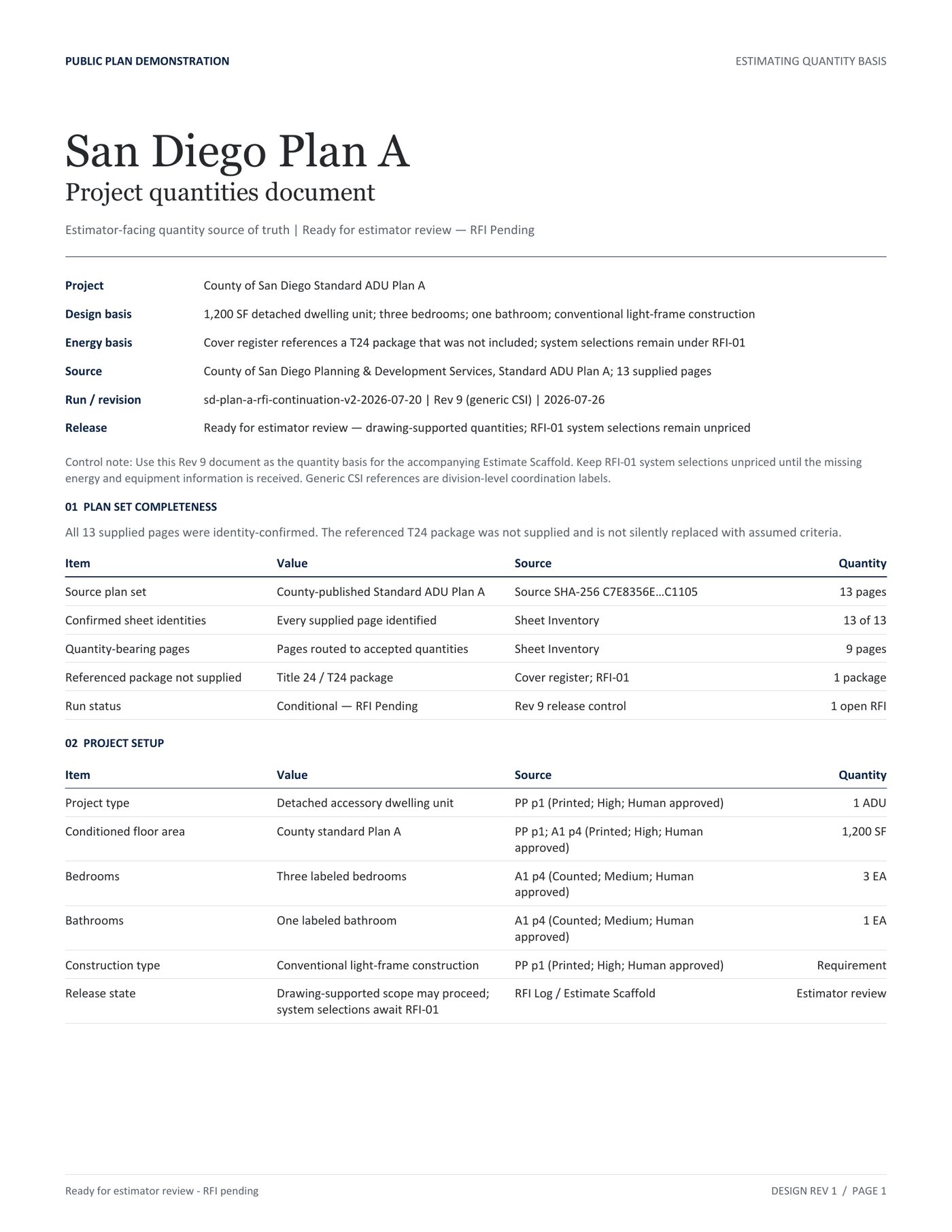
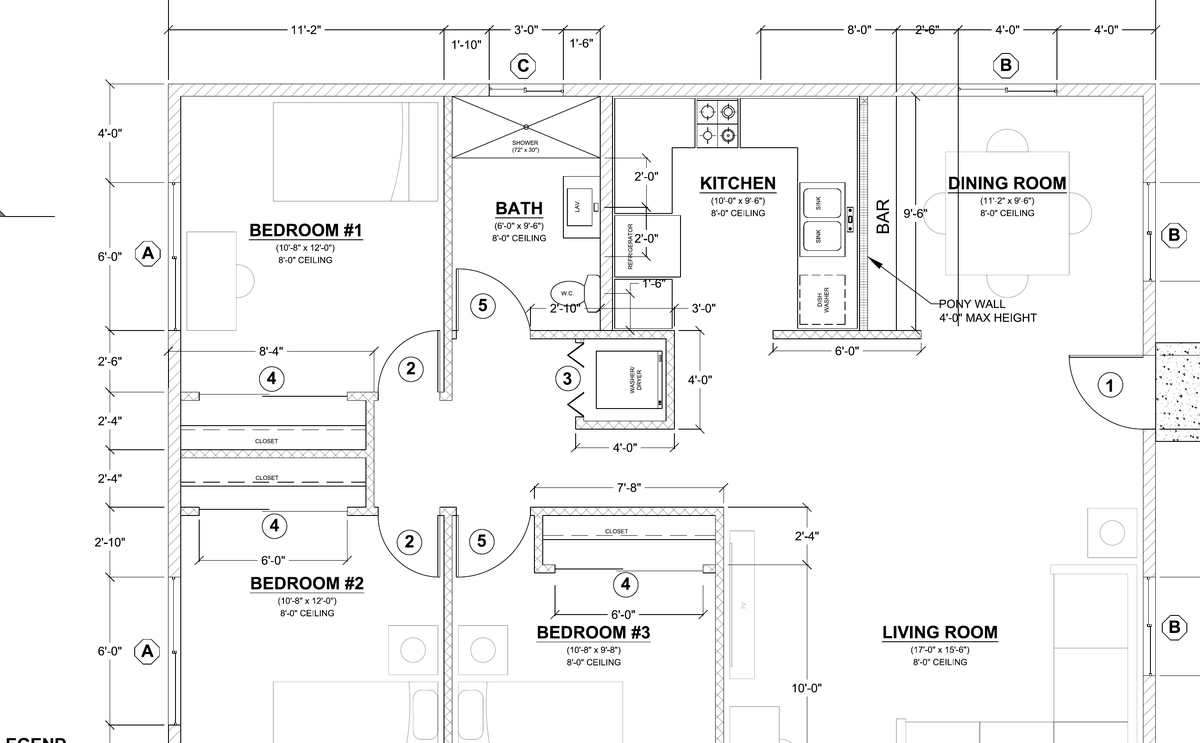
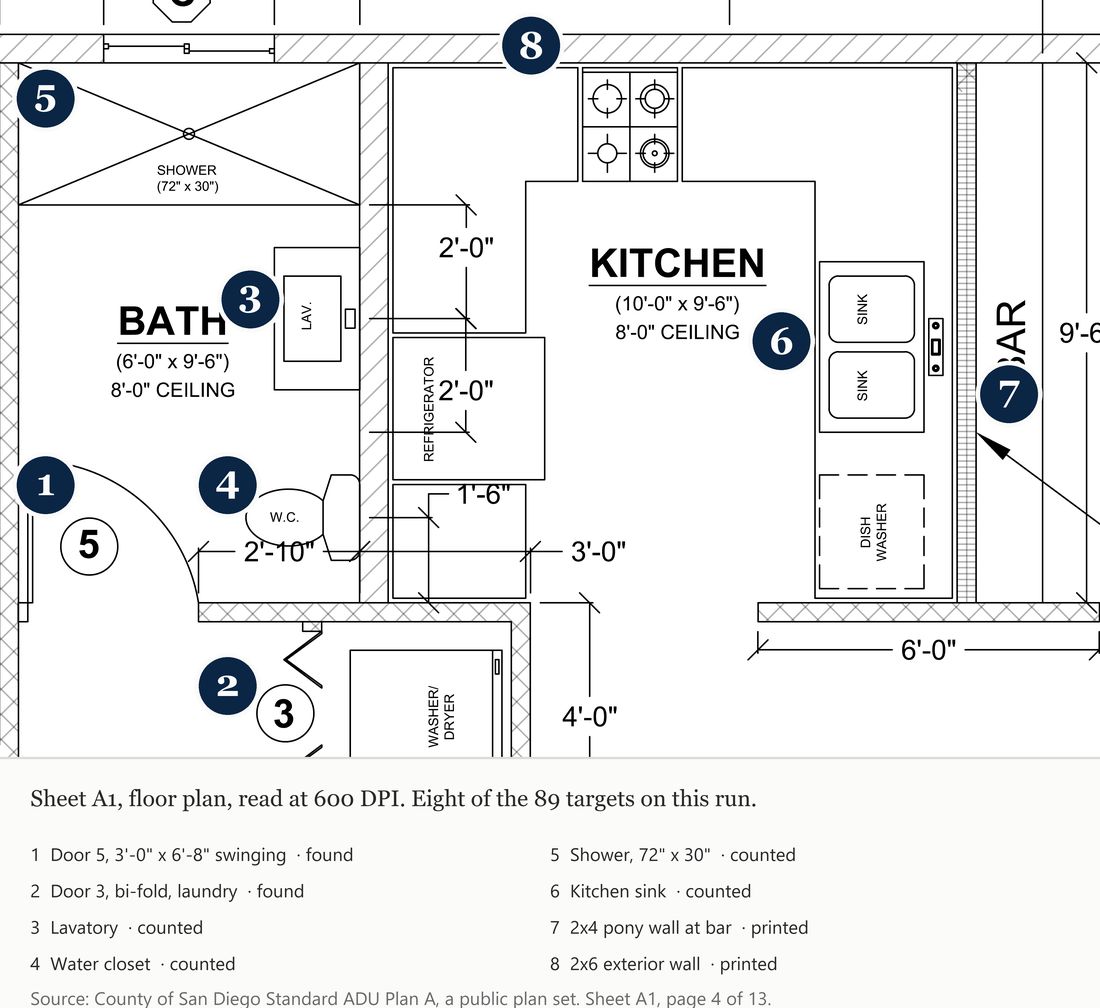
We show the method on drawings anyone can download, never on a client's. In July 2026 Bryon ran the San Diego County Standard ADU Plan A set, 13 pages, through his plan-reading system and checked what came back.
What it reported
40 of 42 facts checked correct.
Of the 42 facts the system reported, 40 checked correct on Bryon's own review, and both errors fell inside the items the system had already flagged as lower confidence.
It recorded 47 targets as not shown on the plans instead of guessing at them.
These figures describe that one reviewed run, not accuracy on every plan set or a client result.
What the plans don't show
It wrote down what was missing.
The cover sheet referenced an energy package that wasn't in the 13 pages. The system wrote it down as missing and parked five items behind one RFI instead of filling in a guess.
Bryon put it this way: "If you require a number, the model will give you a number. Absence has to be legal."
And when two readers disagree: "If one reads a beam as a W10x22 and the other reads it as a W10x26, we go back to the drawings and figure out why."